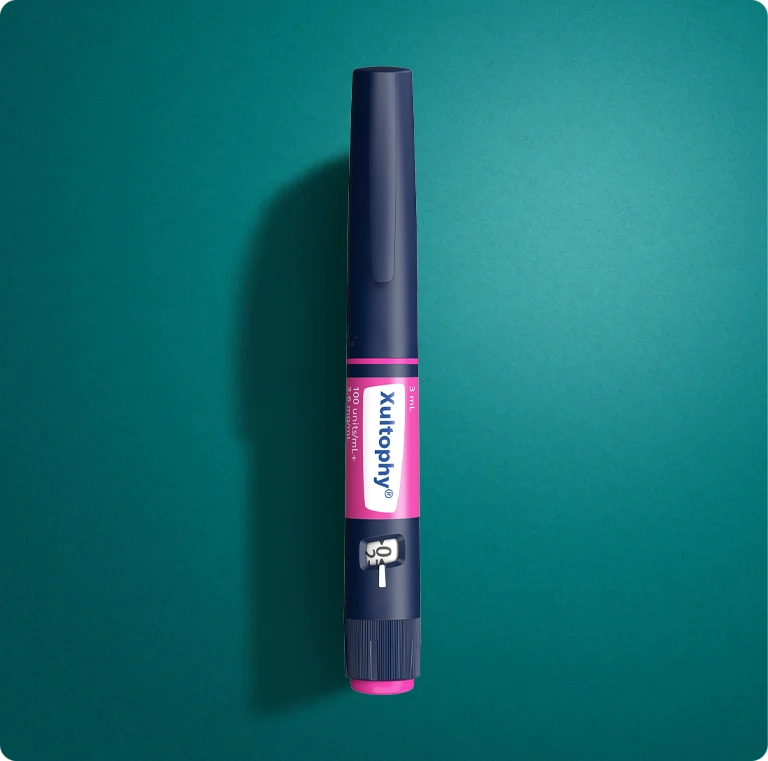
For some adults with type 2 diabetes, oral medications alone may not be enough to keep blood sugar in range. When that happens, clinicians may consider injectable treatments such as a basal insulin, a GLP-1 receptor agonist, or a combination of both.
Xultophy 100/3.6 combines those two approaches in one once-daily pen. The goal is to simplify treatment while supporting steadier blood sugar control.
What is Xultophy 100/3.6?
Xultophy 100/3.6 is an FDA-approved prescription injection used with diet and exercise to improve blood sugar control in adults with type 2 diabetes. It is a fixed-ratio combination of two medicines.
- Insulin degludec, 100 units/mL: an ultra-long-acting basal insulin that provides background glucose control.
- Liraglutide, 3.6 mg/mL: a GLP-1 receptor agonist that supports insulin release when glucose is elevated, slows stomach emptying, and may reduce appetite.
How it works
Insulin degludec helps control fasting and between-meal blood sugar. Liraglutide adds GLP-1 activity, which can help with after-meal glucose control and appetite regulation. Together, they may help some patients achieve better A1C control with fewer separate devices.
- Basal insulin helps manage background blood sugar throughout the day.
- The GLP-1 component can support post-meal control and may help limit insulin-associated weight gain for some patients.
- One pen may make the routine easier than managing separate injections.
Daily timing
Xultophy is taken once daily at the same time each day, with or without food. Unlike some combination products, it does not have to be taken immediately before a meal. The key is consistency.
Choose a time you can realistically maintain, and follow the schedule set by your healthcare provider.
Potential advantages
- Combines basal insulin and GLP-1 therapy in one daily injection.
- Can simplify treatment for adults who would otherwise need multiple injectable medicines.
- May provide steadier glucose support because insulin degludec has a long duration of action.
- Can be taken with or without food, which may make daily use easier.
Potential downsides and cautions
- Because it contains insulin, Xultophy can cause hypoglycemia, especially with missed meals, changes in activity, alcohol use, or other glucose-lowering medications.
- It is not indicated for type 1 diabetes or diabetic ketoacidosis.
- It should not be used together with another GLP-1 receptor agonist unless your clinician is specifically transitioning you from one therapy to another.
- Digestive side effects such as nausea, diarrhea, constipation, or reflux can occur, especially when starting or increasing the dose.
Dosing basics
Xultophy dosing is based on dose steps. The pen delivers a fixed combination of insulin degludec and liraglutide with each step. The maximum daily dose is 50 units, which also limits the amount of liraglutide delivered.
If a patient needs more insulin than the pen can provide, the prescriber may recommend a different regimen.
Frequently asked questions
Can I use Xultophy with Ozempic, Wegovy, Mounjaro, or Zepbound?
Xultophy already contains liraglutide, a GLP-1 receptor agonist. It is generally not used with another GLP-1 medication because that can increase side effects and safety risks. Do not combine products without direct medical guidance.
What if I miss a dose?
Follow the instructions that come with the medication or contact your healthcare team. Do not take two doses at once to make up for a missed dose, because the insulin component can increase the risk of low blood sugar.
The takeaway
Xultophy can be a useful option for adults with type 2 diabetes who need the combined support of basal insulin and a GLP-1 receptor agonist in one daily injection. It is a diabetes medication, not a general weight-loss product, and it should be managed carefully with a healthcare provider.
The Ultimate No-Nonsense Guide to Dulaglutide – Trulicity
Guide to Dulaglutide (Trulicity)
Before GLP-1 medications became part of everyday weight-loss conversations, dulaglutide was already helping many people manage type 2 diabetes with a once-weekly routine.
Dulaglutide is the active ingredient in Trulicity. It is not the newest or strongest GLP-1 option on the market, but it remains an important medication because it has years of real-world use, a simple injection device, and strong evidence for blood sugar control.
This guide explains what dulaglutide does, who it is usually prescribed for, and what to expect if your healthcare provider recommends it.
What is dulaglutide?
Dulaglutide is a once-weekly injectable GLP-1 receptor agonist. Trulicity is FDA-approved, along with diet and exercise, to improve blood sugar control in adults and children 10 and older with type 2 diabetes. In adults with type 2 diabetes who have heart disease or multiple cardiovascular risk factors, it is also approved to reduce the risk of major cardiovascular events such as heart attack, stroke, or cardiovascular death.
Trulicity is not approved as a stand-alone weight-loss medication. Some people do lose weight while taking it, mostly because GLP-1 medications can reduce appetite and slow digestion. However, its average weight-loss effect is usually more modest than newer medications that are specifically approved for chronic weight management.
How it works
Dulaglutide mimics the activity of GLP-1, a hormone your body releases after eating. Its job is to help your body respond to food in a more controlled way.
- Blood sugar support: It helps the pancreas release insulin when blood sugar is elevated and helps reduce excess sugar output from the liver.
- Appetite changes: It can make hunger feel less intense, which may help some people feel satisfied with smaller portions.
- Slower digestion: It delays how quickly food leaves the stomach. This can support steadier blood sugar after meals, but it can also contribute to nausea or fullness, especially early on.
Potential benefits
- Once-weekly routine: Many people prefer one injection per week instead of daily medication reminders.
- Hidden-needle pen: The Trulicity pen is designed so the needle is not visible during use, which can make injections feel less intimidating.
- Established diabetes option: Dulaglutide has been used for years and is familiar to many diabetes care teams.
- Cardiovascular benefit for some adults: For eligible adults with type 2 diabetes and cardiovascular disease or risk factors, Trulicity has an approved cardiovascular risk-reduction indication.
Possible drawbacks
- Not a weight-loss label: If the goal is chronic weight management, insurance coverage may be difficult unless there is a type 2 diabetes diagnosis or another covered reason.
- Digestive side effects: Nausea, diarrhea, vomiting, constipation, stomach discomfort, or reflux can happen, especially when starting or increasing the dose.
- More modest weight change: Compared with Wegovy, Zepbound, or other newer weight-loss-focused treatments, dulaglutide usually produces less average weight loss.
- Not for everyone: People with certain medical histories, including specific thyroid cancer risks or pancreatitis concerns, should review risks carefully with their clinician.
Typical dosing
Trulicity is injected once weekly. Your prescriber will decide the right dose based on your age, treatment goals, blood sugar response, tolerability, and other medications.
| Dose level | Common use |
| 0.75 mg once weekly | Typical starting dose |
| 1.5 mg once weekly | Common maintenance dose |
| 3.0 mg once weekly | May be used when additional blood sugar control is needed |
| 4.5 mg once weekly | Maximum weekly dose for appropriate adult patients |
Do not change your dose without medical guidance. If you miss a dose, follow the instructions from your prescription label or care team.
Tips for using Trulicity
- Choose a weekly day you can stick with. Consistency makes the routine easier.
- Eat smaller meals at first. Large or greasy meals are more likely to trigger nausea while your stomach is adjusting.
- Keep water nearby throughout the day. Hydration helps with constipation, headaches, and general energy.
- Tell your clinician about other diabetes medications, especially insulin or sulfonylureas, because low blood sugar risk can increase when certain medicines are combined.
Final word
Dulaglutide is not the flashiest GLP-1 medication, but it still has a clear place in type 2 diabetes care. It may be a good fit for people who want a once-weekly option, prefer a simple hidden-needle pen, and need steady blood sugar support. For weight loss alone, it is usually not the first medication considered, but it may still be part of the conversation depending on your health history and insurance coverage.